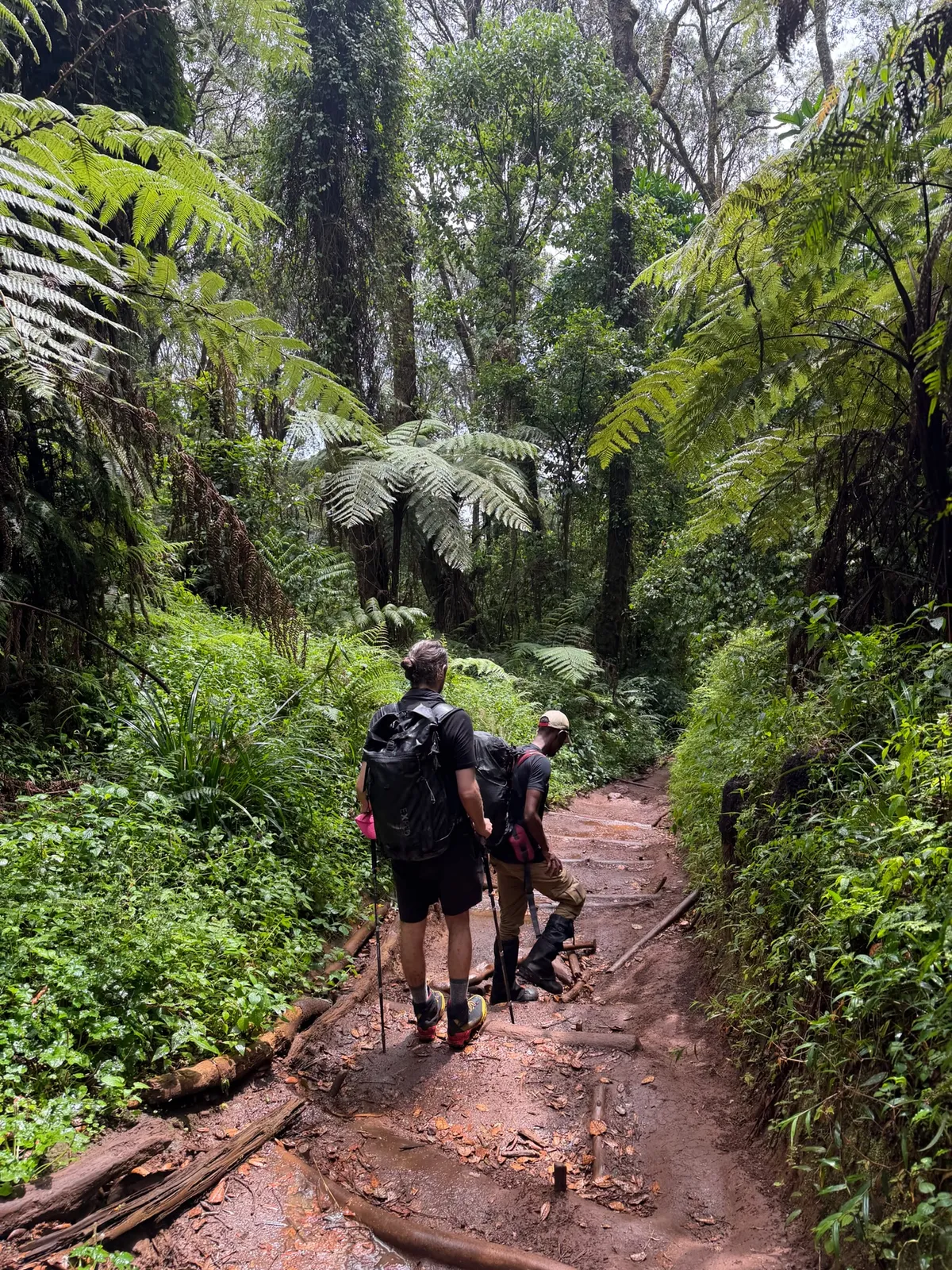
Guides
A physical challenge under real conditions forges trust, and reveals how a team operates under pressure, faster than any conference room can. The case for experiential leadership development.
By Janosch Amstutz · White Mountain Camp
The case in brief
Most senior teams have sat through the same offsite at least once: a good hotel, a facilitator, a wall of sticky notes, and a feeling, by the second coffee break, that everyone is performing a version of themselves rather than being one. The intent is real. The format is the problem.
The boardroom offsite is built on the assumption that you can talk a team into trusting one another. You cannot. Trust is not a topic to be covered; it is a by-product of relying on people when it actually costs something to do so. That is the central case for experiential leadership development, and it is why a genuine shared challenge under real conditions does in days what a conference room rarely manages in years.
The trouble with the conference room
The reason a typical offsite underdelivers is structural, not a failure of effort. A conference room is a low-stakes, fully controlled environment. Nothing is genuinely at risk, so nobody is genuinely exposed. People can manage their image, stay inside their professional role, and leave without ever having had to depend on a colleague for anything that mattered. You learn how your team presents. You do not learn how it behaves.
Pressure is the variable that is missing. When there is no real consequence, there is no real signal. The quiet operator who steadies everyone in a crisis looks identical, across a boardroom table, to the loudest voice in the room. Remove the script and the stakes, and a leadership team's true distribution of judgement, composure, and generosity stays hidden, which is precisely the information a CEO or a Head of People most needs and can least easily get.
Why a real challenge works
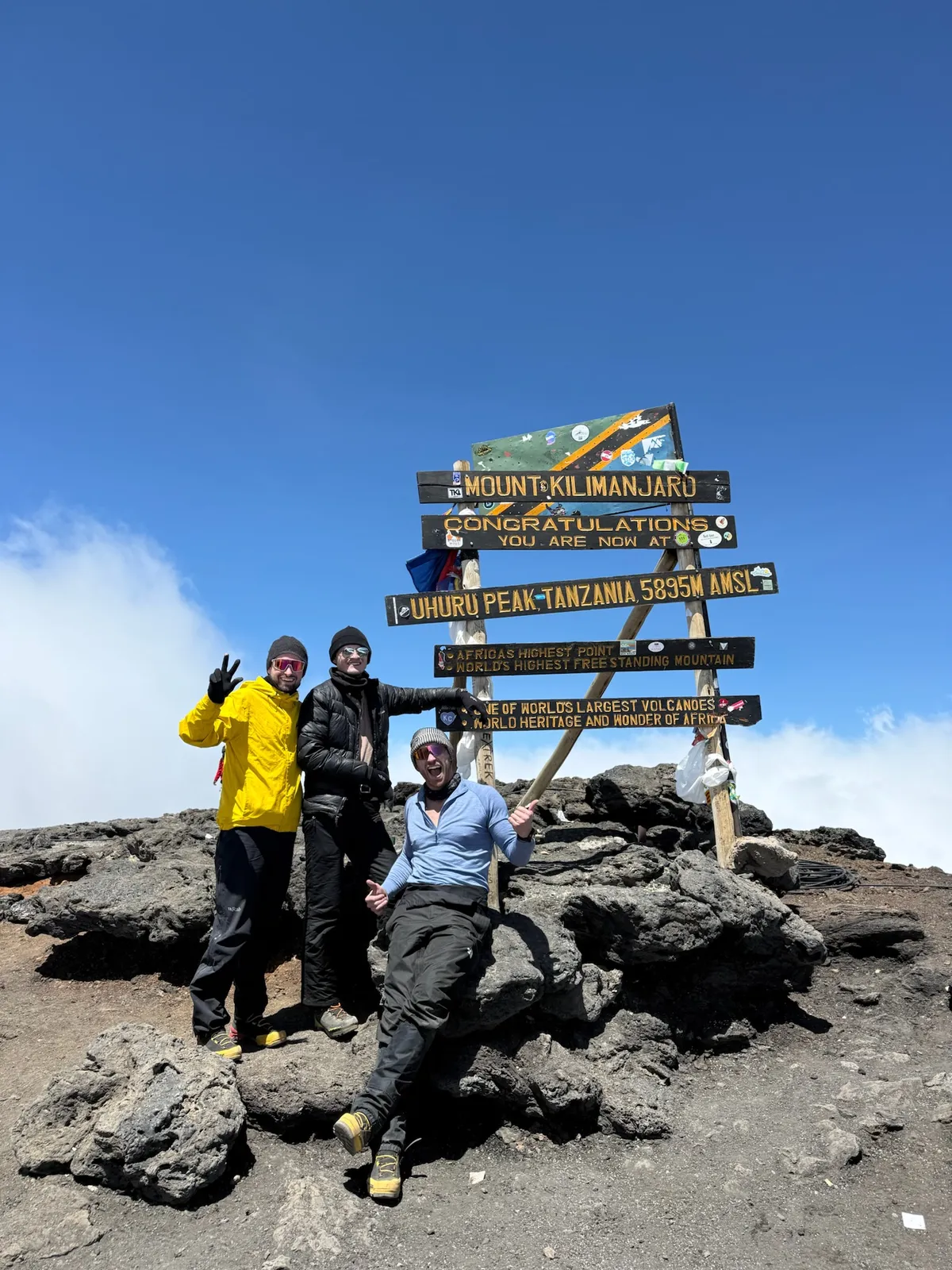
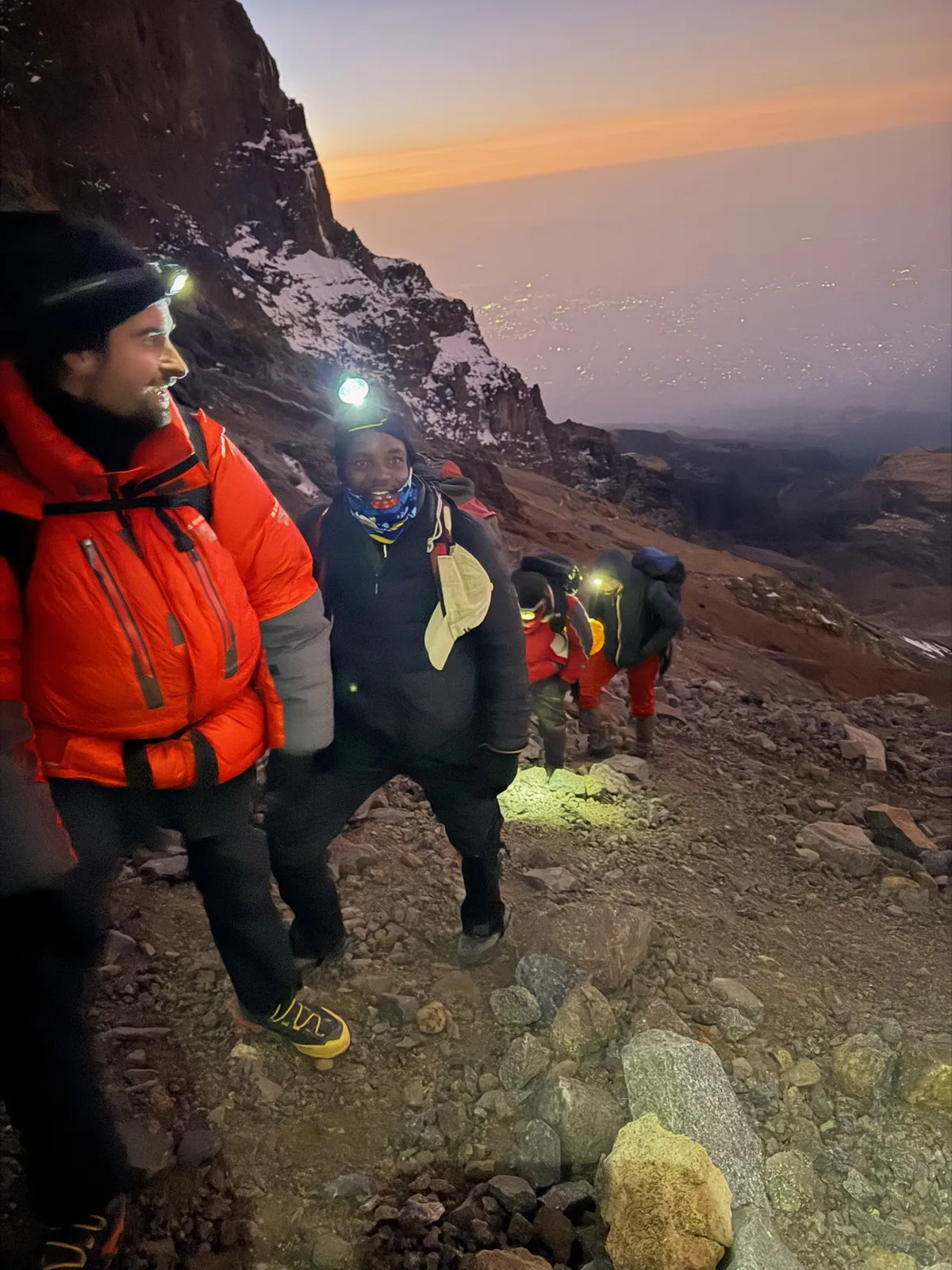
There is a long-understood human pattern: people who go through something hard together, toward a goal that matters, come out bonded in a way that ordinary cooperation does not produce. A shared physical challenge engineers exactly that condition deliberately and safely. Cold mornings, thin air, fatigue, and a summit that is not guaranteed strip away the performance and replace it with something unscripted. You find out who steadies others, who solves, who carries more than their share, and who simply endures, and so does everyone else on the team.
This is also why it is fast. Trust is built from evidence of mutual reliability, and a demanding expedition manufactures that evidence at high density. In a single week a team accumulates more moments of real interdependence than months of normal work might offer. The same dynamic underwrites psychological safety: people speak more freely, and ask for help more readily, once they have direct proof that their colleagues will be dependable when it counts. None of that can be asserted from a stage. It has to be lived.
Trust is not a topic to be covered; it is a by-product of relying on people when it actually costs something to do so.
From experience to development
Adventure on its own is memorable; it is not automatically developmental. The established experiential-learning cycle is the bridge, people act, reflect on what happened, draw conclusions, and apply them. The mountain provides the raw, vivid material to reflect on: a hard decision at altitude, a moment someone stepped up, a plan that had to change. Without reflection, that material stays a great story. With it, the story becomes insight a team can carry back into how it actually works.
For a leadership team specifically, the highest-value moments are the ones that surface how people lead, follow, and adapt when the plan meets reality. Those are exactly the behaviours an assessment centre or a personality questionnaire cannot reach, because they only appear under genuine load. A well-designed expedition does not leave this to chance. It frames the leadership questions in advance, creates space to debrief them on the mountain, and connects them back to the work at home, which is the difference between a trip and a private corporate retreat.
It reveals. Real pressure shows you how your team behaves, not how it presents. It forges. Shared adversity toward a common goal builds trust faster than discussion ever can. It endures. A summit becomes a shared reference point, a common language and a proof of capability the team keeps for years.
The reference point
There is one more thing a conference room cannot manufacture: a shared story worth keeping. A summit is a once-in-a-career marker. Long after the itinerary is forgotten, a team that stood together on the roof of Africa has a common reference, a proof of what the group is capable of together, that surfaces in the hard moments back home. It becomes shorthand. When a project gets difficult, a team that has already done something genuinely difficult, together, draws on a different reserve.
That is the honest case for experiential leadership development over the boardroom offsite. Not that the conventional offsite has no place, but that it cannot reach the things that matter most: how a team truly operates under pressure, and the trust that only forms when people have relied on one another for real.
Why this is our argument to make
White Mountain Camp was founded by Janosch Amstutz, a Swiss high-altitude mountaineer and entrepreneur. He has stood on both sides of this challenge, what it takes to lead a high-performing organisation, and what it takes to move a group safely to 5,895 metres. That combination is why our private corporate retreats are designed as development, not adventure tourism: the leadership questions are framed, the experience is debriefed, and the safety and execution are held to expedition discipline.
Our flagship is a private, bespoke seven-day Lemosho Route expedition on Mount Kilimanjaro, built around one organisation at a time. Expeditions run in October 2026, with further dates in February and July 2027, and private corporate expeditions arranged on request.
Questions leaders and L&D teams ask
Experiential leadership development is an approach that builds leadership capability through direct, demanding experience rather than instruction. It draws on the established experiential-learning cycle: people act, reflect on what happened, draw conclusions, and apply them. A shared physical challenge under real conditions gives a leadership team concrete behaviour to reflect on, how they made decisions, supported one another, and adapted when the plan met reality, which makes the lessons durable in a way a presentation rarely is.
A boardroom offsite is a low-stakes, controlled environment, so people can present a polished version of themselves and never have to truly rely on a colleague. A genuine physical challenge raises the stakes and removes the script. Cold, fatigue, and a hard shared goal reveal how a team actually behaves under pressure and require real interdependence, which is the condition under which trust is formed rather than discussed.
Trust is built by relying on one another in situations that matter, not by talking about it. The most reliable accelerant is shared adversity toward a common goal, where each person experiences colleagues being dependable when it counts. That is why a demanding shared expedition compresses what months of ordinary working together might produce: the team accumulates real evidence of mutual reliability, which is the raw material of trust and psychological safety.
No, it concentrates and reveals, rather than replaces. An expedition surfaces how a team operates under pressure and creates a shared reference point, but the value compounds when it is framed, debriefed, and connected back to how the team works at home. White Mountain Camp builds leadership framing, briefings, and reflection into the private expedition so the experience becomes development rather than only adventure.
No prior mountaineering experience is required. White Mountain Camp uses the seven-day Lemosho Route for its gradual acclimatisation profile and high summit-success rate, which suits mixed-ability groups, and every expedition runs with a dedicated on-mountain doctor and daily medical checkups. Pacing, partial-participation, and non-climbing options can be designed so the whole leadership team can take part appropriately.
It is a private, bespoke seven-day Lemosho Route leadership expedition on Mount Kilimanjaro, designed around one organisation's team. Corporate expeditions are premium and priced on enquiry; as an indicative basis, the public expedition runs approximately USD 10,000 to 12,000 per person. Expeditions run in October 2026, with further dates in February and July 2027, and private corporate expeditions are scheduled on request.
Key takeaways
Begin the conversation
Tell us about your leadership team and your goals, and we will design a private corporate retreat around them. Premium, bespoke, and available now on enquiry.
Explore Corporate Retreats