Guides
A balanced guide for People and L&D leaders deciding how to spend a team's time, budget, and trust, including where the hotel offsite wins.
By Janosch Amstutz · White Mountain Camp
There is no universally best offsite, only the right format for a specific goal, group, and moment. This guide compares a traditional corporate offsite with an adventure leadership expedition as honestly as we can, so you can choose with your eyes open rather than be sold the version that happens to be ours.
We run private leadership expeditions on Kilimanjaro, so we have a clear bias. We will be transparent about it. But a serious People or L&D leader needs the real trade-offs, not a brochure, and there are several scenarios where a conventional hotel offsite is plainly the better decision. We will name those plainly before we make the case for the mountain.
First, definitions
A traditional corporate offsite takes a team out of the daily setting, typically to a hotel, conference venue, or retreat centre, for one to three days of structured work. The agenda is flexible: strategy sessions, planning, training, facilitated team-building, and social time. It is familiar, controllable, and easy to repeat. Its strength is content and flexibility; its limit is that the environment is comfortable by design, which is exactly why it rarely produces emotional intensity on its own.
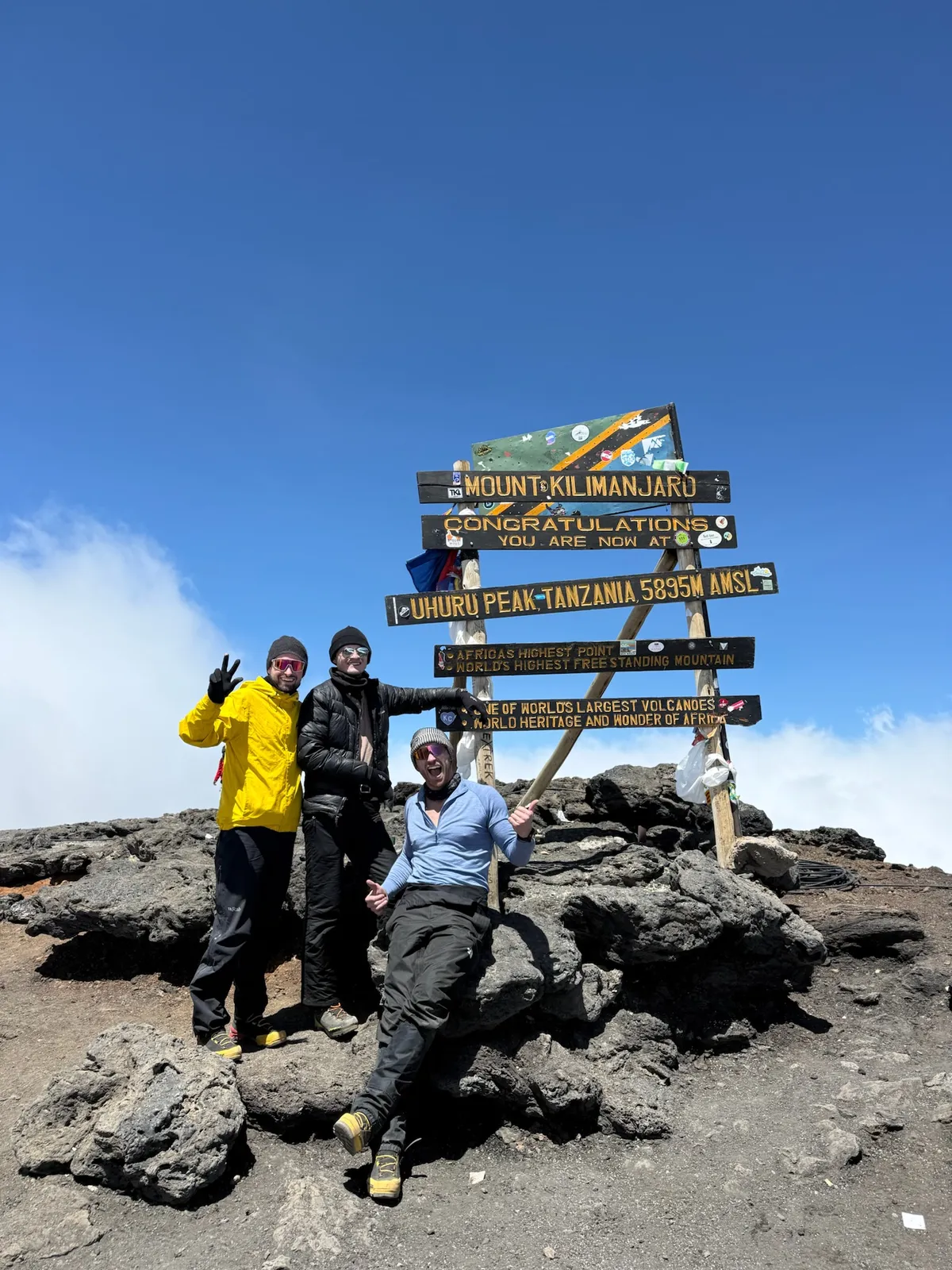
An adventure leadership expedition takes a team into a genuinely demanding environment to pursue a hard, shared goal. Ours is a private, bespoke seven-day ascent of Kilimanjaro on the Lemosho Route. The strength is depth: real conditions, real interdependence, and a shared story that lasts. The limit is the mirror image of the offsite's: it is harder to access, costs more, demands more time, and carries managed physical risk. Neither format is the answer. Each is a tool, and the honest question is which job you are hiring it for.
Side by side
| Dimension | Traditional offsite | Adventure leadership expedition |
|---|---|---|
| Depth of trust built | Moderate. Facilitated exercises and shared social time help, but comfort caps how deep it goes. | High. Real interdependence under genuine conditions builds trust quickly and durably. |
| Leadership insight surfaced | Useful but often self-reported and tidy; people present their best selves in a meeting room. | Revealing. The mountain shows how people lead, follow, and adapt when the plan meets reality. |
| Memorability and shared story | Fades. Few teams recall an offsite vividly a year later. | Lasting. A summit becomes a once-in-a-career marker and the team's shared language. |
| Inclusivity and accessibility | Offsite wins. Accommodates almost everyone, all fitness, mobility, and health needs. | More limited. Real physical demands; best for an opt-in senior team. Pacing and partial options help. |
| Cost | Offsite wins. Far lower per head; scalable to modest budgets. | Premium. Public expedition approximately USD 10,000 to 12,000 per person; corporate priced on enquiry. |
| Time commitment | Offsite wins. Typically 1 to 3 days, local, low travel burden. | Seven days on the mountain plus travel either side, a deliberate, infrequent commitment. |
| Risk and duty of care | Offsite wins. Low physical risk; simple to sign off. | Real but managed risk; requires diligence. On-mountain doctor 24/7 and documentation on enquiry. |
| Logistics effort | Offsite wins. Straightforward to organise and repeat in-house. | Substantial, but handled for you. We run the planning, logistics, and on-mountain execution. |
| Best-fit scenario | Large or mixed groups, modest budgets, frequent cadence, content-heavy strategy or training. | A senior team seeking deep trust, resilience, and one defining shared challenge. |
Be honest
We would rather you make a good decision than book the wrong thing with us. There are clear cases where a conventional offsite is simply the right tool, and we say so without hedging.
Choose a traditional offsite when you need to include a large group, where a summit attempt is impractical and inclusivity matters more than intensity. Choose it when the budget is modest, the per-head economics are not close, and a hotel offsite stretches further. Choose it when you run retreats on a frequent cadence; an expedition is a once-in-a-while event, not a quarterly rhythm. And choose it for content-heavy work, strategy days, operational planning, and skills training genuinely benefit from screens, breakout rooms, whiteboards, and a flexible agenda you can re-shape on the fly. The offsite also carries lower risk and far less logistical and duty-of-care weight. For many teams, in many quarters, that combination is exactly right.
An expedition cannot, and should not, replace all of that. If your honest answer is that you need to align on next year's plan with forty people on a tight budget, the mountain is the wrong tool, and we will tell you so.
The other side
The expedition earns its place in one specific job: building deep trust and resilience in a senior team, and giving them a shared challenge they will reference for the rest of their careers. A hotel removes discomfort by design, and discomfort, met together, is precisely what forges the bonds a facilitated exercise can only simulate. Cold mornings, thin air, and a hard goal reveal how a team actually operates under pressure: who steadies others, who solves, who endures. That insight is honest because it is unscripted.
A hotel removes discomfort by design, and discomfort, met together, is precisely what forges the bonds a facilitated exercise can only simulate.
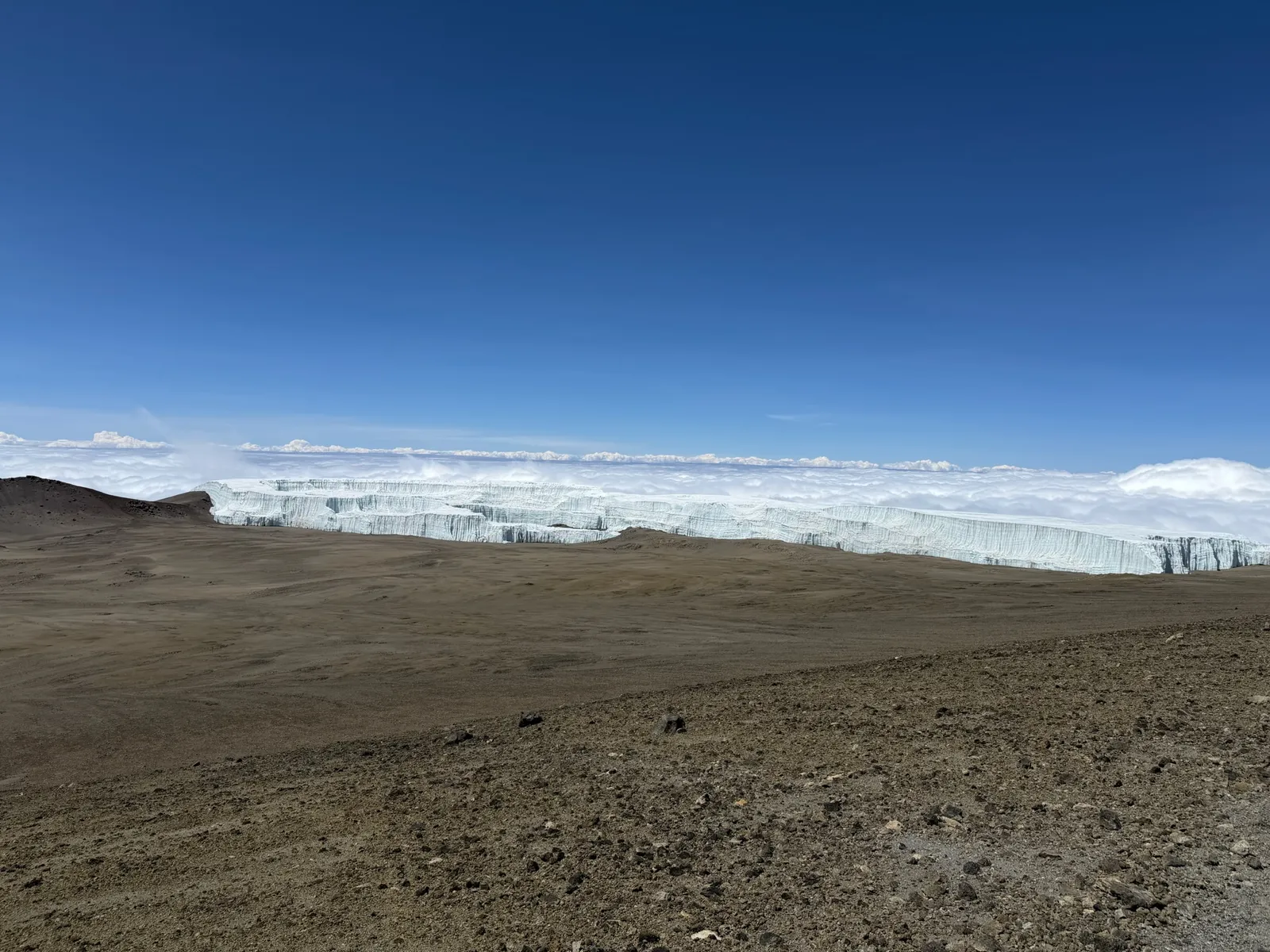
The shared story matters as much as the insight. A team that reaches Uhuru Peak together carries a common reference, a proof of what the group is capable of, that outlasts any conventional retreat. For a leadership team at a defining moment, after a merger, a hard year, a new mandate, or a generational handover, that durable, prestige-laden marker is the point. It is not for every team, every year. It is for the right team, once, when the goal is depth rather than breadth.
Our version is a private, bespoke seven-day Lemosho Route expedition, single-organisation, with luxury private camps and full medical and safety support. You can read the full format on our corporate retreats page.
A simple test
Alignment, planning, or training points to an offsite. Deep trust, resilience, and a defining shared challenge points to an expedition.
Large or mixed-mobility groups favour an accessible offsite. A small, willing senior team is the natural fit for the mountain.
Frequent cadence and modest budgets favour the offsite. A once-in-a-career investment, made deliberately, favours the expedition.
Many organisations do both: regular offsites for the working rhythm, and a single expedition when a senior team needs something the boardroom cannot give.
Key takeaways
Questions People & L&D leaders ask
It depends on your goal. For deep trust, resilience, and a once-in-a-career shared challenge for a senior team, an adventure leadership expedition is hard to match. For large groups, tight budgets, frequent cadence, or content-heavy strategy work, a traditional offsite is usually the better, more practical choice. Be honest about which outcome you actually need before deciding.
A traditional offsite wins when you need to include a large or mixed-mobility group, when the budget is modest, when you run retreats several times a year, or when the work is content-heavy, strategy days, planning, or skills training that benefit from screens, breakout rooms, and a flexible agenda. It is also lower-risk and far simpler to organise.
A genuine shared challenge under real conditions surfaces how people lead, follow, and endure under pressure, and builds trust faster than facilitated exercises. It also produces a durable shared story, a common reference the team carries for years. A hotel offsite, by design, removes the discomfort that makes those moments real.
Less so than a hotel offsite, and this matters. A summit attempt has real physical demands, so it is best suited to a senior team that opts in willingly. We design pacing, partial-participation, and non-climbing options so more of a team can take part appropriately, but a traditional offsite remains the more universally accessible format.
A traditional offsite is far cheaper and shorter, often one to three days, locally. An expedition is a premium, multi-day commitment with travel either side; our public 7-day Kilimanjaro expedition runs approximately USD 10,000 to 12,000 per person, with private corporate expeditions priced on enquiry. It is a deliberate, infrequent investment rather than a recurring line item.
A hotel offsite carries low physical risk and is simple to sign off. An expedition carries real but managed risk and requires proper duty-of-care diligence. We run every expedition with a dedicated on-mountain doctor available around the clock, daily medical checkups, and the high-success-rate Lemosho acclimatisation profile, and we provide medical, safety, and risk documentation to your HR, legal, and insurance stakeholders on enquiry.
Begin the conversation
Tell us your goal, group, and budget, and we will give you a straight answer, even if that answer is a traditional offsite. When the mountain is the right tool, we design a private expedition around your team. Premium, bespoke, and available now on enquiry.
Discuss Your Team's Goals